


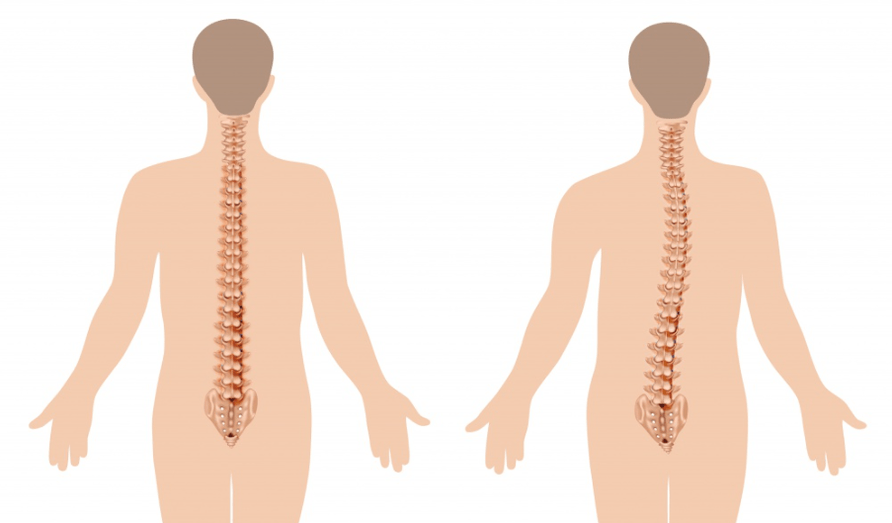
Cervical osteochondrosis confidently ranks first in prevalence among spine diseases.Almost no one has never heard of this disease, but few people know that osteochondrosis is not a disease, but a condition that includes the entire complex of diseases that arise when the spine tries to adapt to unfavorable conditions.And the treatment of cervical or other types of osteochondrosis should be comprehensive.
Definition of osteochondrosis
Osteochondrosis is a degenerative-dystrophic lesion of the intervertebral disc caused by a decrease in the water content in it.
What we commonly call osteochondrosis naturally results from a decrease in water content in the intervertebral disc.
Mechanics of disease.Stages of osteochondrosis
In the cervical, thoracic and lumbar spine, intervertebral discs are located between the vertebral bodies.The intervertebral disc consists of the nucleus pulposus - special cartilage and water, and the fibrous ring, which is a denser cartilage.The main function of the intervertebral disc is shock absorption.If there is an insufficient amount of fluid in the core, the disc cannot perform this function properly, and osteochondrosis of the cervical spine or other parts of the spine occurs.
When describing the stage of cervical or other types of osteochondrosis, it is customary to use the classification of neurosurgeons A.I.The base was proposed in 1971.
Stage 1 of osteochondrosis
Losing water, the intervertebral disc becomes less elastic and elastic, but it still has to take the same load as before.As a result, the height of the disc decreases, the disc becomes flat, and protrusions appear.
Stage 2 of osteochondrosis
With continued pathological exposure, cracks may appear in the fibrous ring of the intervertebral disc.Due to the decrease in the height of the intervertebral disc, instability of the entire segment occurs.
Stage 3 of osteochondrosis
A complete rupture of the fibrous ring occurs, in which the more fluid core partially flows out (herniated intervertebral disc).
Often, such changes lead to symptoms of cervical osteochondrosis.The thoracic region is least prone to hernia formation, where even with intervertebral disc pathology, part of the load is assumed by the sternum and ribs.
A bulging or herniated disc can affect the spinal nerve root, causing pain, inflammation, swelling, and disruption of nerve fiber conduction.
Stage 4 of osteochondrosis
Without experiencing resistance from the damaged intervertebral disc, adjacent vertebral bodies become closer together.Disruption occurs in the intervertebral joints (spondyloarthrosis), and the vertebrae can twist or move relative to each other (spondylolisthesis).
At this stage, the compensatory forces of the body come into play.To relieve the load from the damaged disc, the vertebra itself is horizontal, growing in width, increasing its area.In addition, the tissue destroyed by the fibrous ring can be partially replaced by bone.
In some cases, this process can reduce pain, but often the growth of the vertebrae further narrows the spinal foramen and compresses the nerves.
Disease symptoms.Stages of osteochondrosis
The classification commonly used by doctors includes not the stage, but the degree of osteochondrosis.It more fully describes the symptoms of osteochondrosis and starts from the moment the patient experiences pain.
1 degree of osteochondrosis of the cervical spine or other parts of the spine
Occurs when the intervertebral disc ruptures, due to sudden movement or too much force.It manifests itself as sudden pain, a feeling of electric current running down the spine, and muscles reflexively tensing.
Osteochondrosis of the 2nd degree of the cervical spine or other parts of the spine
The second stage of cervical osteochondrosis can manifest itself in the form of symptoms of intervertebral protrusion and instability of the spine.Chronic pain that worsens with exercise.Intervals of remission and exacerbation alternate.Cervical spine is characterized by neck pain that worsens after a long stay in one position, headache, arm pain, shoulder pain, periodic discomfort or numbness in the fingers.For the lumbar region - pain in the lower back, pain in the gluteal region, periodic pain in the sacrum, frequent fatigue in the legs.
Osteochondrosis of the 3rd degree of the cervical spine or other parts of the spine
Cervical osteochondrosis manifests itself in the form of symptoms of a herniated disc (pain along the affected nerve, numbness in the arms or legs, changes in gait, headache) or distant symptoms of intervertebral disc herniation (in the cervical region: frequent headaches, tinnitus, dizziness, decreased vision, hearing, muscle strength in the arms, difficult heart rhythm; in the lumbar region: kidney disease, gastrointestinal tract, sexual dysfunction, numbness or weakness in the legs).
Grade 4 osteochondrosis of the cervical spine or other parts of the spine
It is generally accepted that the fourth stage of osteochondrosis begins from the moment the hernia no longer manifests itself, the manifestations of the disease may decrease, but the symptoms of cervical osteochondrosis, as well as instability of the spine, slipping or twisting of the vertebrae, or their complete fixation relative to each other still remain.They may be accompanied by manifestations of vertebral growth, which can also compress the spinal cord, leading to their atrophy, or block the spinal canal (secondary spinal canal stenosis) and compress the spinal cord (spinal cord ischemia).In addition, the fourth stage includes the consequences of surgical intervention if the hernia is removed immediately (various types of innervation disorders, paresis, inflammation).
Prevention and treatment of cervical osteochondrosis
Cervical osteochondrosis is a disease in which everyone is at risk.Don't think he will overtake you.If you haven't found symptoms of cervical osteochondrosis, it's time to think about prevention.
- In people who lead a sedentary lifestyle, the nutrition of the intervertebral disc is often disturbed, which leads to dehydration - therefore, moving more.
- People with bad habits are more likely to develop spinal diseases and the reason is dehydration of the body - drink more water and, if possible, switch to a healthy lifestyle.
- Push-ups, pull-ups, dumbbells and fitness once a week is not a healthy lifestyle, sorry.To give your spine a beneficial load, you need to do special gymnastics for the spine.Every day.
- People who do not know how to hold their body correctly in space often suffer from curvature of the spine, which also has a bad effect on the intervertebral discs.– Watch how you stand in line or sit in a meeting...
Treatment of cervical osteochondrosis is a complex process like osteochondrosis itself.Unfortunately, two basic principles do not apply to it: "It will go away on its own" and "It still cannot be treated."This disease will not go away on its own, and without treatment it will turn the spine of its lucky owner into rubble.
In the treatment of cervical osteochondrosis, it is important not to miss the beginning of the disease, when everything can still be fixed and you can survive with "little blood".About half of very young people recognize the first symptoms of cervical osteochondrosis, and by the age of 40, almost everyone already knows about them directly.